
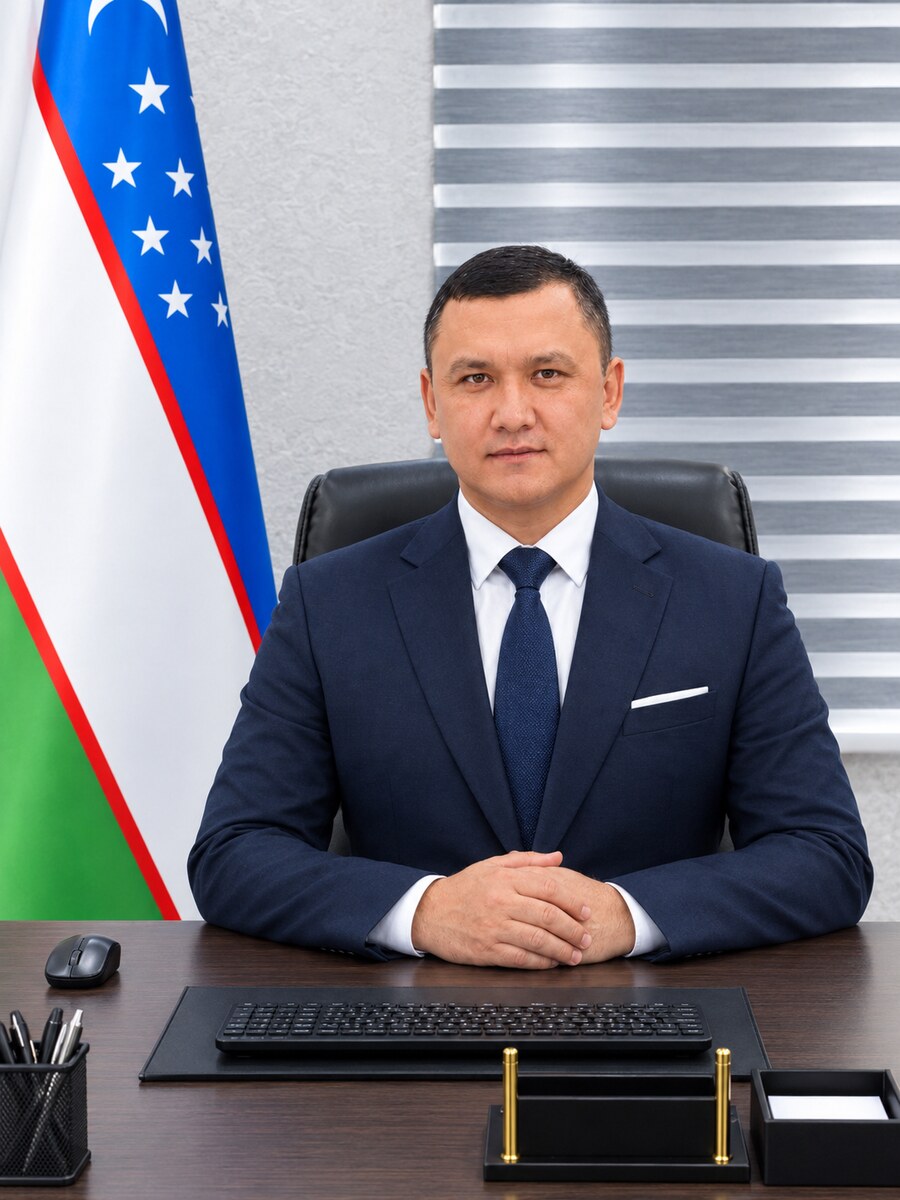
Koʻziyev Jaxongir Madaminovich
- Reception hours:
- Daily · 14:00–16:00
- Phone:
- +998 94 652-05-40
- Email:
- mmjahongir81@gmail.com
Duties and areas of work
1. General duties
The Department of Soil Agrochemistry and Optimization of Plant Nutrition is the unit that carries out the Institute’s research in agrochemistry and plant nutrition. It is responsible for assessing the agrochemical state of soils; studying the cycling, transformation and uptake of nutrients in the soil–plant–water system; determining the nutrient requirements of crops; developing optimal, balanced and site-specific fertilization systems; improving the scientific basis for efficient fertilizer use; and developing methods, recommendations and guides based on research results.
The department’s main goal is the comprehensive assessment and monitoring of the agrochemical state of soils and their nutrient supply using modern laboratory methods, digital mapping and GIS; determining the patterns of nutrient cycling, transformation, balance and uptake in the “soil–plant–fertilizer–water–climate” system; developing precise and resource-saving fertilization technologies based on precision agriculture and digital agrochemistry; and developing and introducing modern methods, guidelines and manuals on agrochemical assessment, nutrition diagnostics, fertilization and nutrition management.
2. Main duties
integrated assessment of the agrochemical state of soils, determining the supply of macro- and micronutrients based on GIS and digital mapping, and continuous agrochemical monitoring;
calculating the agrochemical nutrient balance by modelling interactions in the “soil–plant–fertilizer–water–climate” system and developing science-based fertilization systems;
determining optimal fertilizer rates, ratios and application times for crops based on agrochemical and physiological requirements and introducing resource-saving technologies;
improving the agrochemical basis for producing environmentally safe, high-quality agricultural products through balanced and differentiated nutrition systems;
agrochemical assessment of nutrient uptake efficiency of crops under abiotic stress (salinity, drought, high temperature) and developing stress-resilient nutrition management;
developing a plant nutrition diagnostics system (leaf analysis, rapid tests, spectral and sensor technologies) and fertilization models based on the “exact need – exact rate” principle, and introducing them into practice;
forecasting nutrient cycling with digital agrochemistry and “smart farming” technologies and creating intelligent decision-support models and software platforms;
comprehensive assessment and optimization of the ecological sustainability and economic efficiency of nutrition systems based on agrochemical, energy and resource-saving indicators.
3. Main areas of the department’s work
assessment and monitoring of the agrochemical state of soils;
digital agrochemistry and agrochemical mapping (GIS, GNSS, remote sensing, sensor technologies);
nutrient balance and agrochemical modelling;
scientific justification of optimal fertilizer rates and application systems;
plant nutrition diagnostics;
differentiated and precision fertilization technologies;
nutrition management under abiotic stress;
ecological and economic efficiency of nutrition systems;
product quality and food safety;
methodological support and introduction of results into practice.
Biography
J.M. Koʻziyev has 20 years of work experience.
J.M. Koʻziyev has carried out research and applied work in various positions at the Institute of Soil Science and Agrochemical Research since 2006. His research covers agrochemistry, optimal plant nutrition, differentiated fertilization and assessment of the agrochemical state of soils. During this time he has led 4 research projects, including 1 project for young scientists and 3 applied projects. He also supervises 6 DSc and PhD dissertations and has been the supervisor of 2 researchers who successfully defended their PhD dissertations.
His research has produced 1 patent, 4 software registration certificates, more than 15 scientific and practical recommendations and 4 methodological guides, and more than 158 national and international scientific articles and conference papers have been published.
In the course of his research, optimal fertilizer ratios for agricultural crops were determined and the first digital cartograms of nutrients were created using GIS technologies. A prototype of a geo-referenced smart fertilizing unit based on geospatial data was also built.
Training abroad: in 2015 in the FAO training programme in Bishkek (GIS-based thematic mapping), in 2024 at Wageningen University in the Netherlands, in 2025 in the Arab Republic of Egypt, and in 2026 at the V.V. Dokuchaev Soil Science Institute and the D.N. Pryanishnikov All-Russian Research Institute of Agrochemistry in the Russian Federation.