
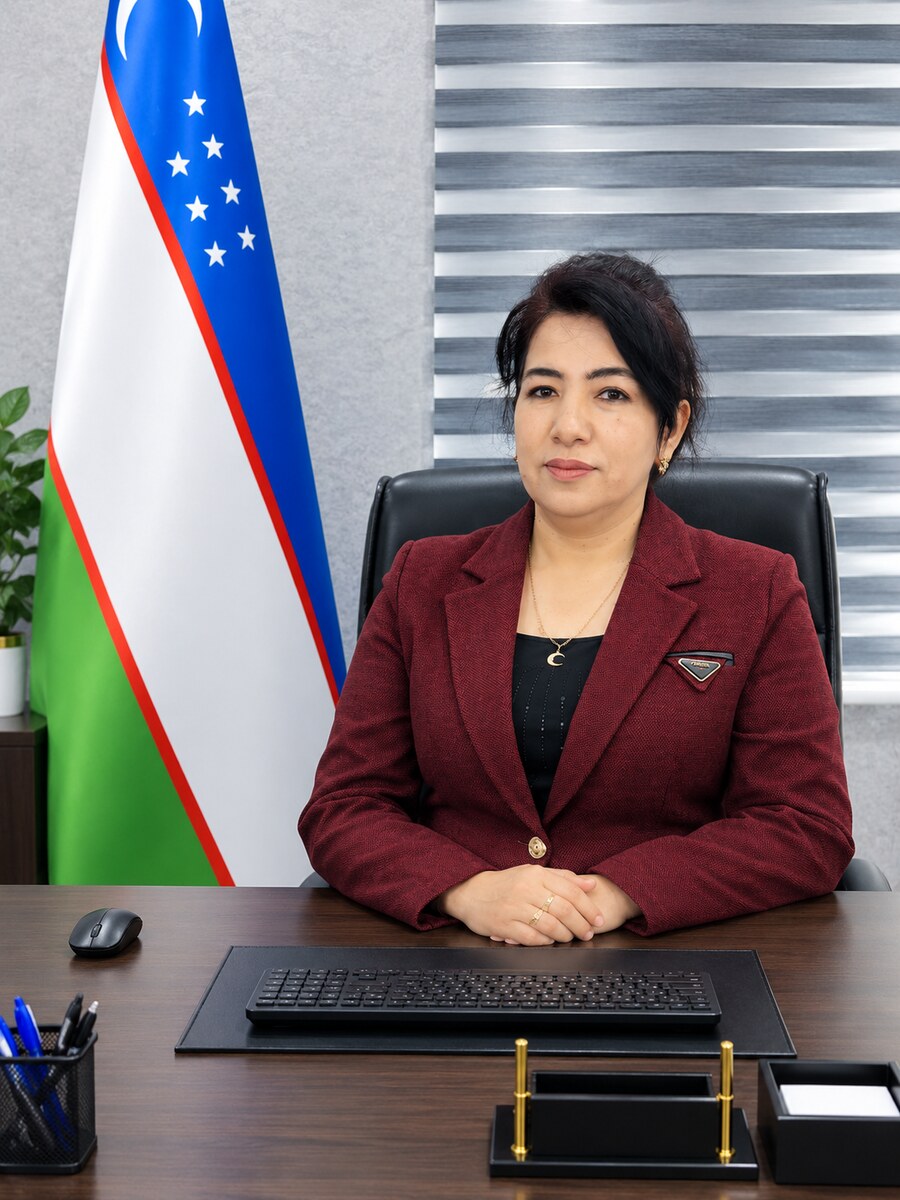
Nuriddinova Xurshida Toshevna
- Reception hours:
- Tuesday, Thursday · 14:00–16:00
- Phone:
- +998 90 992-98-70
Duties and areas of work
About the laboratory
The Analytical Testing Laboratory is a unit of the Institute of Soil Science and Agrochemical Research that supports the institute’s research with modern laboratory analysis. It specializes in analysing soil, plant and natural water samples, introducing new analytical methods and providing laboratory services. The chemical and agrochemical composition of soil, plant and water samples is studied using modern instrumental methods, international standards and advanced laboratory technologies.
Main tasks
supporting the institute’s research with modern laboratory analysis;
applying modern instrumental methods and introducing new methods for analysing soil, plants and natural waters;
providing analytical support for assessing the soil quality (point rating) of irrigated agricultural land in Uzbekistan;
analysing soil samples to monitor the degree of salinity on irrigated land and to compile salinity cartograms;
analysing soil samples to compile agrochemical soil cartograms;
assessing the supply of micronutrients (Cu, Zn, Mn, B, Co, Mo) in soils;
analysing soil, plant and water samples on request from agroclusters, farms and smallholders;
building and maintaining a national electronic database of soil samples and analytical results;
developing science-based recommendations on preserving and increasing soil fertility and using mineral and organic fertilizers efficiently.
Main analyses performed in the laboratory
The laboratory carries out more than 30 soil, plant and water analyses: particle-size distribution, water-soluble salts, exchangeable cations, pH, EC, carbonates and gypsum, humus, total and available NPK, micronutrients, heavy metals (Ni, Cr, Cu, Zn, Pb, Cd), degree of salinity; water and plant analyses; rapid analysis in the field with a mobile laboratory. Under service contracts the laboratory serves agroclusters, farms and smallholders, agricultural enterprises, and research and educational institutions.
Biography
X.T. Nuriddinova has more than 20 years of research experience.
X.T. Nuriddinova began her career in 2005 at the Research Institute of Soil Science and Agrochemistry. On 31 January 2019 she received a PhD in Agricultural Sciences. Since 2020 she has headed the institute’s Analytical Testing Laboratory.
X.T. Nuriddinova actively introduces modern methods of soil analysis and works to improve the quality and reliability of analytical results. With her direct involvement, ISO international standards and methods for soil analysis are being adapted to the soil and climate conditions of Uzbekistan and put into practice.
Main activities and achievements
Her research focuses on the forms and balance of nitrogen in soil, the nitrogen cycle in the “soil–fertilizer–plant” system, and increasing soil fertility and crop yields;
more than 90 scientific works have been published on the results of her research;
in December 2022 she received the academic title of senior researcher;
she has been a principal investigator in 6 applied research projects carried out at the institute;
observer member of the international technical committee ISO/TC 190 “Soil quality”;
awarded the badge “35 Years of Independence of the Republic of Uzbekistan”, established by Presidential Decree of 25 June 2026.